NewsNov 3, 2026By Authors of Report Muslim Student Voices7 min read
Authors of Report on Muslim Students in the Toronto Area Reflect on Bullying and Belonging
Decades of research on peer-to-peer maltreatment in childhood and adolescence, together with anti-bullying advocacy, have established bullying as a serious public health, educational and mental health issue.
Looking at the long-term harms of bullying, psychologist Dieter Wolke and his colleagues found that “victims of childhood bullying, including those that bullied others (bully-victims), were at increased risk of poor health, wealth and social-relationship outcomes in adulthood.”
Research like this has helped move the needle. Both the World Health Organization and the Public Health Agency of Canada now recognize bullying as a significant and preventable public health concern.
Yet much of the anti-bullying movement still does not give adequate attention to racialized bullying. Racialized or racist bullying “is defined as bullying motivated by prejudice against someone’s actual or perceived race, ethnicity, culture, citizenship status or religion.”
All forms of bullying affect young people’s well-being and sense of belonging. Racialized bullying, however, has an added dimension of harm. It transforms an interpersonal experience of rejection into a broader lesson about where a person stands in society and how others regard them. That’s because it’s shaped by the wider racial meanings, stereotypes and hierarchies already circulating around young people.
This means anti-racialized bullying work must go beyond simply reacting. It must also be proactive sociocultural work that builds conditions of belonging, recognition and safety before the next incident takes place.
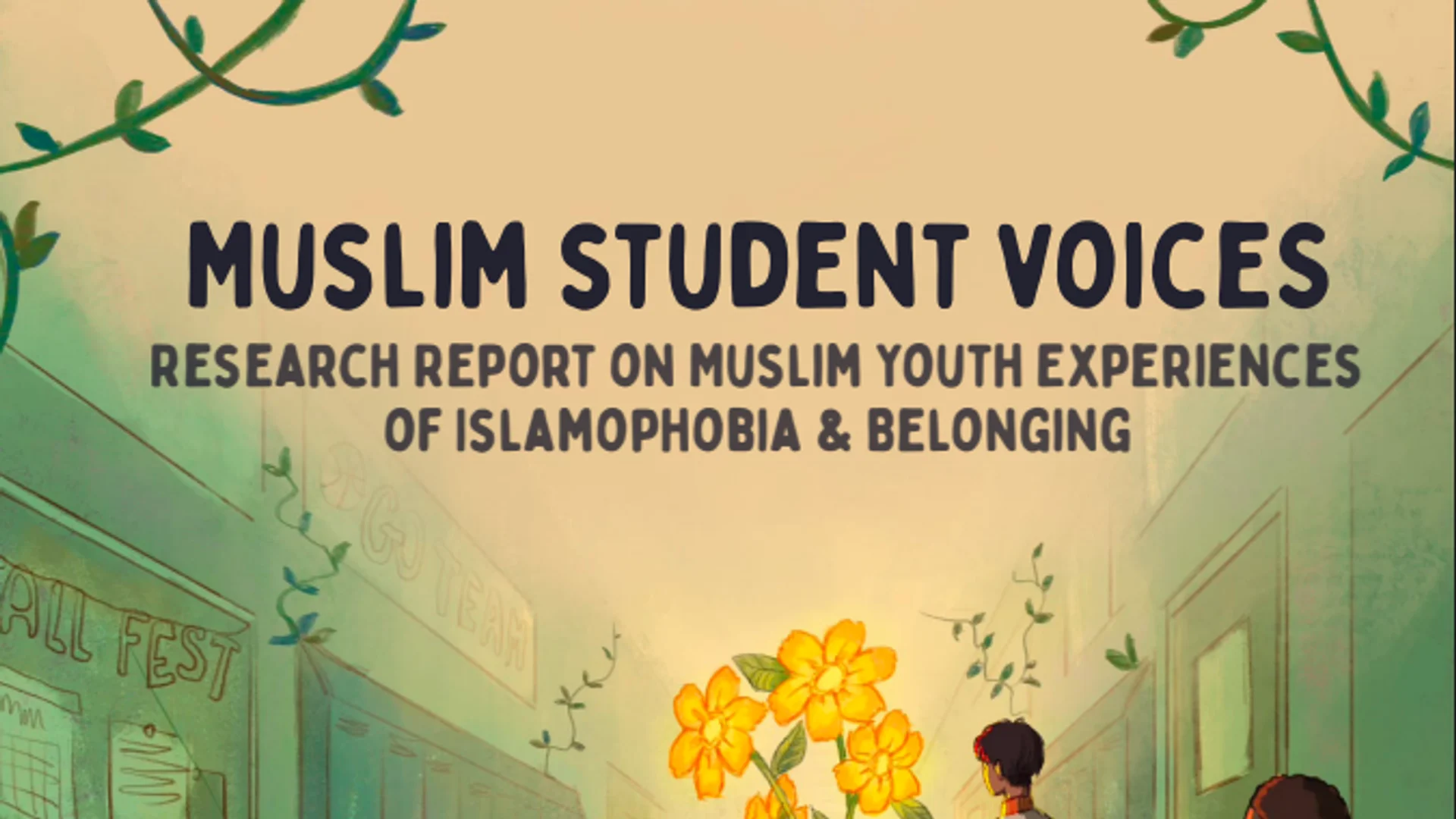
Understanding this added layer — and how young people navigate racialized bullying, specifically Islamophobic bullying — guided our new report, Muslim Student Voices: Research Report on Muslim Youth Experiences of Islamophobia & Belonging.
Our starting point as researchers was not to simply document how Islamophobic bullying takes place in young people’s lives, but to also understand how these experiences shape their sense of self, safety, agency and belonging. What we heard points to affirmation as a strategy against racialized bullying.
Bullying as part of the school day
Muslim students represent a significant and growing presence in Ontario’s classrooms. According to the 2021 census, nearly 943,000 people in Ontario identified as Muslim. That’s approximately 6.7 per cent of the province’s population, the highest proportion of any province in Canada. Muslim students are an important part of the fabric of Ontario schools.
The report brings together more than a year of research and collaboration through an academic-community partnership between Trent University, the Islamophobia Research Hub at York University and the National Council of Canadian Muslims.
A little over a year ago, on Oct. 18, 2025, 30 Muslim-identifying youth aged 14 to 18 from across the Toronto area joined us for a storytelling retreat. It explored issues of belonging, exclusion, Islamophobia and identity affirmation. Through guided reflection, group discussions and audio diary entries, participants shared what these experiences looked like in their everyday lives.
Our findings reinforce existing research on Islamophobia and its systemic, interlocking impacts on Muslim communities. Overwhelmingly, the young people identified school as the place where they most often experienced Islamophobic harm.
They shared story after story of being made to feel unsafe, vulnerable or hyper-scrutinized by peers, by educators and administrators and by school culture itself. Their accounts described institutional inaction, curricular erasure, everyday surveillance, exclusion and educators and administrators who were themselves sources of harm.
Still, peer-to-peer racialized bullying was repeatedly centred in their accounts. What stood out was how often and how routinely it happened, more than the severity of any single incident. Students described racialized bullying less as an exceptional rupture and more as part of the social atmosphere of school life. It was embedded in jokes, questions, comments, slurs and everyday peer interactions.
These were the exchanges through which young people learned who they were and how others understood their place in the world.
Harms inflicted by adults were also significant and often deeply consequential. But peer racism revealed the wider cultural climate that young people were continually required to read, interpret and navigate. Some encounters were explicit.
Aleiyah (all student names are pseudonyms), for example, described being called a “terrorist” in the school hallway. She chose to keep walking rather than give the other student the reaction they wanted.
Another student, Iman, recalled a class presentation in which a peer described Muslims as “villains” who had “killed his people.” No adult intervened. Iman chose to stay silent, because responding risked making her the target of further hostility.
These encounters illustrate the particular burden of racialized bullying. The hostility targets a young person’s identity. It carries a message that rejection may not be confined to one peer, one classroom or one school.
Navigating, not just enduring
For the young people in our study, this meant regularly anticipating hostility, calculating for safety and carefully managing how much of themselves to reveal.
Over time, young people learn to negotiate their identities around other people’s expectations and prejudices. This process can undermine their developing self-concept and self-esteem at a critical stage of social identity formation.
As Juwairiya shared, sometimes people “just want a rise out of you.” By choosing not to engage, she spared herself the emotional burden of explaining herself to someone who might remain hostile anyway. Other participants responded differently: confronting stereotypes, educating peers, rebuilding friendships and communities or grounding themselves more firmly in their Muslim identities.
These were not passive responses to bullying; they were ways young people actively negotiated their safety, dignity and sense of self in environments that too often demanded it of them.
From anti-bullying to affirmation
This is why we propose affirmation as a useful anti-racialized bullying strategy.
Affirmation means cultivating intentional opportunities for young people to be seen, heard and supported on their own terms. It means giving them space to enter institutional settings outside the frame of crisis.
We encourage educators and educational administrators to recognize the agency students already have, respect students’ terms of engagement, respond to students in visible and meaningful ways and resource wider opportunities for students to explore and direct how they share their voices and identities.
As Yusra, another retreat participant, reminds us: “When you’re included, it’s priceless.”
In practice, affirmation can take many forms, including effectively resourcing affinity spaces and groups in schools, creating opportunities for wider peer connection and exchange or supporting curricular changes that bring diverse communities into the classroom.
A multi-faceted, student-first approach to affirmation recognizes that countering racialized bullying, and cultivating belonging for every student, calls for intentional, sustained, system-wide effort.
About the Authors:
Nadiya N. Ali is an Assistant Professor specializing in Critical Race, Black Studies, Islamophobia, and Anti-Black Islamophobia at Trent University. Nadiya is passionate about community-action research and working on issues of social justice and inclusion.
Dr. Ayesha Mian Akram is an Assistant Professor in the Department of Sociology at the University of Calgary. Her research, at the intersections of critical Muslim studies, political sociology, and feminist knowledge production, centres the lived experiences of diverse Muslim women and youth as they navigate complex systemic realities.
Dr. Mian Akram is an interdisciplinary critical educator with 15 years of pedagogical and teaching experience in K-12 schools, adult education initiatives, community-based spaces, and university environments. She joined the University of Calgary in 2023 from the University of Windsor where she was a sessional instructor in Women’s and Gender Studies and researcher in Sociology, Law, and Social Work.
Dr. Nour Hammami is a social epidemiologist, quantitative methodologist, and director of the Nourish Research Lab. Her research interests lie in furthering scientific understanding of: intersections of structural and social disparities in health, advancing quantitative methodology to closely reflect the lived experience of these individuals, and informing practice and policy to improve and deliver equitable health and wellbeing.
Dr. Hammami is a co-investigator on the Canadian and International teams of the Health and Behaviour in School-aged Children (HBSC) | WHO Collaborative Cross-National Study. Founded in the year 1982, HBSC Study spans over 50 countries collaborating to advance adolescent health and well-being. Funded in Canada by the Public Health Agency of Canada
She is currently an Assistant Professor at Trent University, Ontario, Canada (Durham campus). She received her PhD in Public Health and Health Systems from the University of Waterloo. Then pursued postdoctoral fellowships at McGill University in Social Inequalities of Adolescent Health and in Digital Equity and Epidemiology. Dr. Hammami was the recipient of two excellence in teaching awards: the Symons Award for Teaching Excellence (2025) from Trent University and the Teaching Excellence Award for Trent University Durham from the Ontario University Student Alliance (2026)
Last modified on Tue, 17 Nov 2026 12:35am