NewsNov 12, 2026By CJPME3 min read
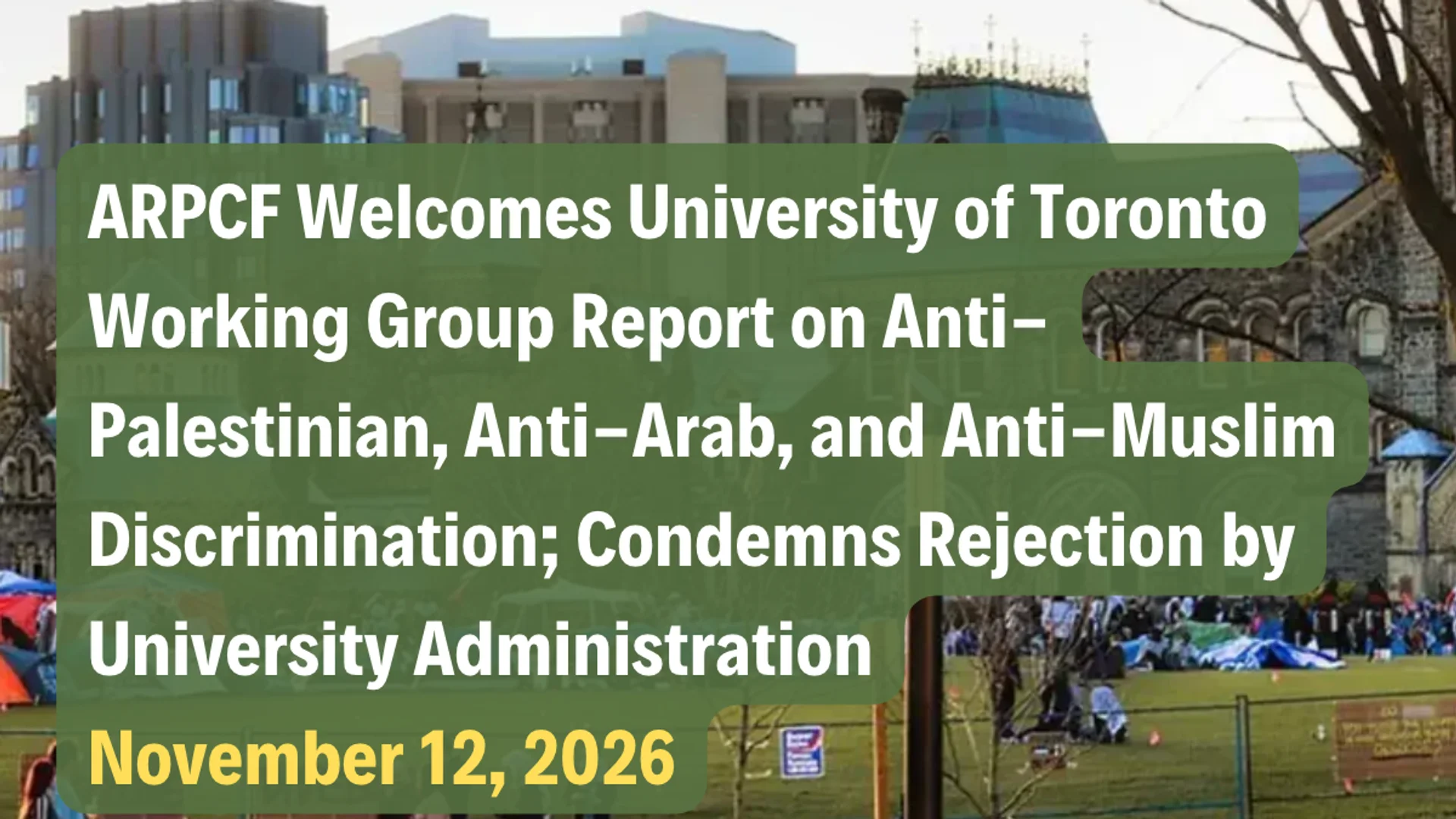
ARPCF Welcomes University of Toronto Working Group Report on Anti-Palestinian, Anti-Arab, and Anti-Muslim Discrimination; Condemns Rejection by University Administration
Montreal, November 12, 2026 — The Anti-Racism Program of the CJPME Foundation (ARPCF) welcomes the release of Over-Policed, Under-Protected, the final report of the University of Toronto’s Muslim, Arab, and Palestinian Discrimination Working Group. The ARPCF views this as a breakthrough in documenting and exposing the systemic nature of anti-Palestinian racism, Islamophobia, and anti-Arab racism within Canadian universities, and in identifying concrete institutional reforms needed to address them. It is therefore deeply concerned by the University's refusal to accept the report and its recommendations as written.
Established in 2024 by the University of Toronto’s Provost, the independent working group conducted 85 consultations and gathered 525 survey responses from students, faculty, staff, and librarians across the University's three campuses. The result is an extensive examination of discrimination and institutional practices, accompanied by 57 recommendations for meaningful change. The ARPCF commends the working group and those who came forward to share their experiences, often at considerable personal and professional risk.
The findings are deeply troubling. The report identifies a persistent pattern of “over-policing and under-protection” affecting Muslim, Arab, and Palestinian members of the University community. Students and faculty described being stereotyped as terrorists or antisemites, subjected to surveillance and harassment, and made to fear the consequences of speaking about Palestine. Many no longer trust the University's complaints procedures. Some fear that reporting discrimination could expose them to further reprisals. The report also documents inconsistent enforcement of protest and speech policies, discriminatory assumptions about safety and risk, and an institutional culture in which Palestinian perspectives are treated as uniquely controversial or threatening. These experiences point to something much deeper than individual prejudice. They reveal how anti-Palestinian racism, Islamophobia, and anti-Arab racism can become embedded in university policies, administrative decisions, and everyday institutional practices.
“The University of Toronto asked its own community to speak out about discrimination. Hundreds responded, sharing experiences of exclusion, fear, and institutional neglect,” said Jamila Ewais, Lead Researcher of the ARPCF. “Yet after this extensive process, the University has declined to accept the working group's recommendations as written. This is deeply disappointing. While the administration acknowledges that discrimination exists and has announced some commitments, its response falls short of confronting the institutional practices identified in the report. Prayer spaces and educational resources matter. But they cannot replace meaningful action against discriminatory policing, restrictions on academic freedom, and the silencing of Palestinian voices. Universities cannot claim to champion equity while avoiding the structural changes needed to make it a reality.”
The ARPCF calls on the University of Toronto to reconsider its response and engage meaningfully with the working group and affected communities. The 57 recommendations deserve serious consideration, clear implementation timelines, and public accountability. Priority must be given to addressing selective policing, protecting academic freedom and political expression, and ensuring that complaints of discrimination are handled fairly and without retaliation. Palestinian, Arab, and Muslim students and faculty should not have to choose between speaking about their identities and experiences and feeling safe on campus. Nor is this a concern limited to the University of Toronto.
The report raises important questions for universities across Canada, where similar patterns of exclusion and restrictions on Palestine-related expression have emerged. Acknowledging discrimination is a necessary first step. Confronting the institutional structures that enable it is what makes anti-racism meaningful.
About the ARPCF – The mandate of the Anti-Racism Program of the CJPME Foundation (ARPCF) is to create public awareness about racism in Canada. This mandate falls in line with the Foundation’s broader purpose of monitoring and combating manifestations of racism, xenophobia, and discrimination by increasing public awareness of such biases.
Tagged under
Over-Policed Under-Protected Report at University of TorontoIslamophobia on CampusIslamophobia in OntarioIslamophobia in CanadaLast modified on Mon, 16 Nov 2026 11:26pm