NewsNov 19, 2026By MCRO2 min read
Canada's top university refuses to endorse its own bombshell report on anti- Muslim, Arab, and Palestinian discrimination
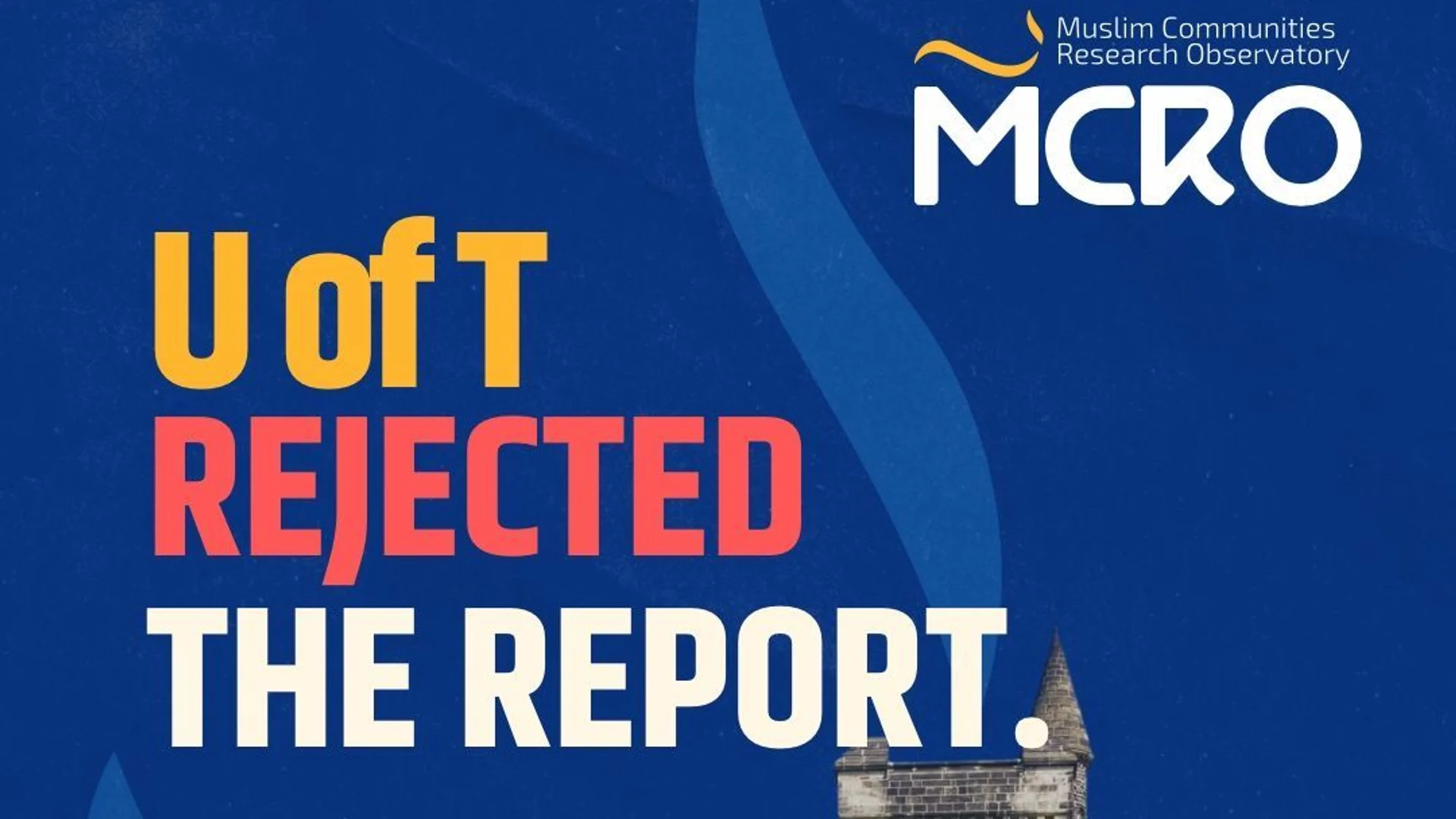
TORONTO, November 19, 2026 — The University of Toronto has set a troubling global precedent: after commissioning an investigation into discrimination across its campuses, the university published the findings, and then explicitly declined to endorse the report and its recommendations. The implications extend well beyond Canada, as universities worldwide are confronting questions about anti-Muslim, anti-Arab and anti-Palestinian discrimination, campus protest and academic freedom.
The 175-page report, Over-Policed, Under-Protected, was produced by the university's Muslim, Arab, and Palestinian Discrimination Working Group (MAP DWG). Conducted between March 2025 and January 2026, the study drew on 85 consultations and 525 survey responses from students, faculty, staff and librarians across all three campuses. Its findings document over-policing, unequal treatment, chilled academic expression and inadequate protection. Among the testimony:
A physician turned away from a newborn a medical trainee wearing hijab, saying: “Careful, she may throw rockets at us.”
A faculty member warned a student: “If you report me, I will know it was you.”
One Palestinian respondent described a campus climate in which “lying down and dying quietly is the only way to be Palestinian without being anti-Semitic.”
The working group issued 57 recommendations addressing campus policing, academic freedom, institutional neutrality, complaint processes, online harassment and the recognition of anti-Palestinian discrimination, among other issues. In its response, the university notes that "aspects of the report will be offensive and upsetting to [...] some Jewish and Israeli colleagues and students."
This move by U of T is an unprecedented departure from its reaction to other working groups it has commissioned to conduct studies. Recommendations from its anti-Black racism, anti-Asian discrimination, and antisemitism working groups have all been accepted without restraint. “The test of an institution’s commitment to fighting racism is not whether it commissions a report. It is what happens when that report asks the institution to change," said Amira Elghawaby, Founder and Executive Director of the Muslim Communities Research Observatory. "When the naming of racism becomes more objectionable than confronting the racism itself, the institution has become part of the problem.”
Last modified on Fri, 20 Nov 2026 9:57pm